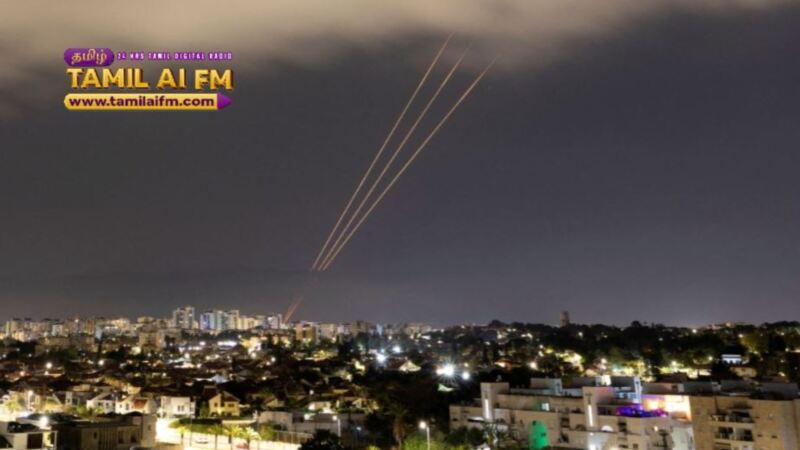
WASHINGTON — Iranian missiles and drones have continued to strike crucial energy facilities and other targets in Gulf countries and the wider Middle East nearly three weeks into the war.
Neutralising Iran’s missile and drone capabilities is a crucial war aim for both the U.S. and Israel, which launched the conflict on February 28, but that may prove very difficult.
Here’s why:
How big is Iran's missile and drone stockpile?
Iran had the largest stockpile of ballistic missiles in the Middle East before the war, according to the US Office of the Director of National Intelligence.
The arsenal included missiles of different types, with ranges of up to 2,000 kilometers, capable of hitting Israel, and speeds of up to 17,000 km an hour, according to Iranian state media.
Among the missiles it has fired at Israel are some with cluster munition warheads that are harder for Israel’s missile defence shields to neutralise.
The size of its missile stockpile before the war was unknown, with estimates ranging from 2,500 by Israel’s military to around 6,000 according to other analysts.
The Arms Control Association says Iran’s missile programme is largely based on North Korean and Russian designs and has benefited from Chinese assistance.
Many of Iran’s missile sites are in and around Tehran. There are at least five known underground “missile cities” in various provinces, including Kermanshah and Semnan, as well as near the Gulf region.
In 2020, it fired a ballistic missile from underground for the first time according to a 2023 report by Behnam Ben Taleblu, a senior fellow at the U.S.-based Foundation for Defense of Democracies.
Iran is also a major drone manufacturer and has the industrial capacity to produce around 10,000 per month, according to the Centre for Information Resilience, a non-profit research group funded by Britain’s Foreign Office.
It pioneered the Shahed drone, a much cheaper alternative to expensive missiles, and sold large quantities of them to Russia for use in the war in Ukraine.