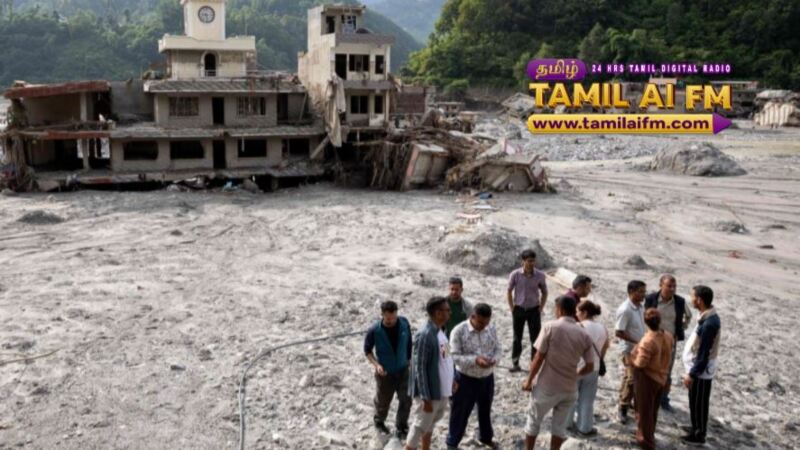
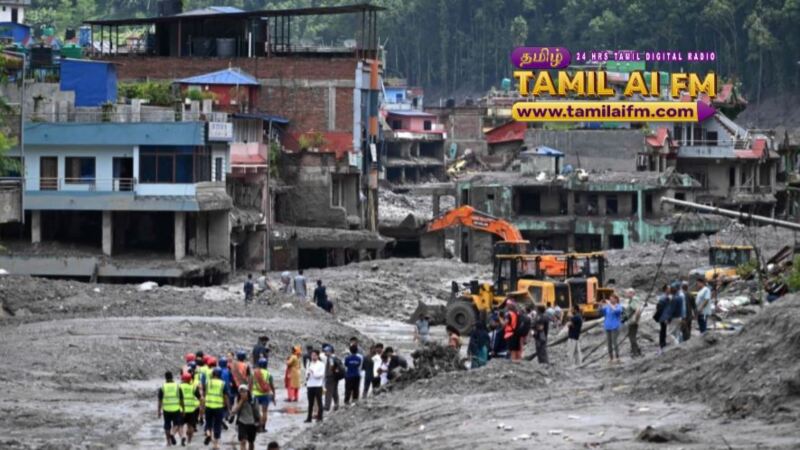
BIDUR (Nepal) — Rescuers in Nepal and China battled through leg-sucking mud, as well as the threat of rising rivers and a newly formed lake, today to search for thousands missing after a deadly wall of water and debris swept through the Himalayas, engulfing entire villages.
Latest figures from both countries put the number of missing at 3,048, including hundreds of foreigners. There were 768 confirmed deaths, with reports of some bodies possibly swept downstream as far away as India.
Nepal said it had begun the grim task of burying some of the hundreds of bodies today, after first taking DNA samples so that families could later reclaim them and perform traditional funeral rites once they had been identified.
The disaster, which struck the China-Nepal border Wednesday morning, was caused by a glacial collapse, sending a wall of water and debris downstream, the US Geological Survey said.
Nepali army troops and engineers also drilled through debris on Sunday towards hydropower workers believed trapped in a tunnel at the Trishuli 3A hydroelectric site in the Himalayan river valley after they successfully inserted a pipe into the passage.
They have “started sending air through the small opening”, Nepali Home Minister Sudan Gurung said in a statement.
Overnight rain and rising river waters hampered efforts earlier today, filling the excavation area with water before conditions eased, the Nepal army said.
Nepal’s disaster authority listed 933 hydropower workers among the missing in an area home to vast energy infrastructure projects.
Chinese rescuers near the Tibet border port that was hit by a deadly mudslide were “moved to a safe location” today after a new lake was formed by a landslide, state media reported.
China’s state news agency Xinhua reported today that experts had said “a glacier on the southern slope of Lirung Peak in Nepal” fractured, triggering an ice-rock avalanche.
The torrent plummeted rapidly, forming a massive debris flow that travelled more than 20 kilometres before crashing into Gyirong Port.
“The sudden glacial collapse and flash flood is a devastating reminder of how fragile these mountain environments can be,” UN climate chief Simon Stiell said in a statement.