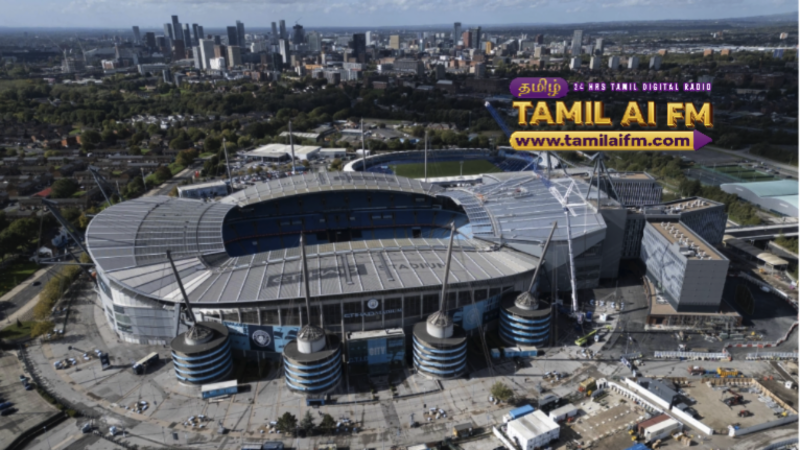
MANCHESTER — Standing behind the counter of his fish-and-chip shop near the Etihad Stadium, Sailish Parekh says the transformation of east Manchester over the past two decades has been remarkable.
Manchester City “has not only just been a football club for the area. It’s a bit of a saviour, to be honest,” he told AFP.
Before City — now embroiled in the biggest financial scandal to hit football’s cash-rich Premier League — moved to the area it was “very deprived” with high rates of unemployment, he said.
Since the club’s takeover by deep-pocketed Abu Dhabi investors in 2008, long-neglected districts between the stadium and the city centre have become symbols of the northern city’s rebirth.
Decades of decline linked to deindustrialisation have been reversed.
In neighbourhoods such as Ancoats and New Islington, red-brick warehouses still stand as reminders of Manchester’s industrial past.
But many disused mills and factories have given way to apartment blocks, trendy cafes and co-working spaces.
Software engineer Simon Martin, 44, who lives in Ancoats, recounted how a cab driver told him he would have hesitated once to pick him up, when the area was riddled with crime.
Today, Martin praises the “really nice community” with “more young families moving in”, although soaring rents have pushed out some lower-income residents.
The transformation reflects the influence of Manchester City and its owner, Abu Dhabi United Group (ADUG), controlled by Sheikh Mansour bin Zayed al-Nahyan, a member of the United Arab Emirates royal family.
The Emirati investors have not just turned City into one of Europe’s dominant football clubs.
They have also poured money into property development, building homes and commercial spaces on council-owned land leased under favourable terms.