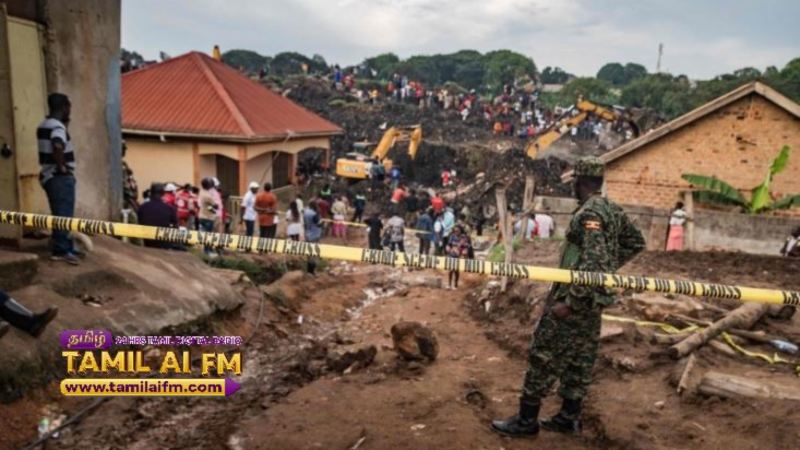
KAMPALA — When the giant landfill collapsed in Uganda’s capital Kampala a year ago, Zamhall Nansamba thought she was hearing an aeroplane taking off.
Then came screams and a giant wave of garbage rushing towards her, ripping up trees as it went.
Nansamba, 31, grabbed her children and ran. She was luckier than most — the avalanche of waste killed some 35 people before stopping at her doorstep.
Many survivors of the collapse at the Kiteezi dump on August 9, 2024, have yet to be compensated for their losses, leaving them trapped at the dangerous garbage site.
Kiteezi is the largest landfill in Kampala, serving the city’s residents since 1996, receiving 2,500 tonnes of waste daily.
City authorities recommended closing it when it reached capacity in 2015, but garbage kept coming.
The disaster highlighted the challenge of managing waste in many rapidly urbanising African cities.
A 2017 landfill collapse in Ethiopia killed 116 people. A year later, 17 died after heavy rain caused a landslide at a dump in Mozambique.
It doesn’t help that wealthier countries send vast amounts of waste to Africa, particularly second-hand clothes, computers and cars.
In 2019, the United States exported some 900 million items of second-hand clothing to Kenya alone, more than half designated as waste, according to Changing Markets Foundation, an advocacy group.
The Kiteezi collapse “could have been avoided”, said Ivan Bamweyana, a scholar of geomatics at Kampala’s Makerere University.
For a decade, he said, the landfill grew vertically until it reached a height of more than 10 metres.
Early on the fateful morning, rain seeped into the landfill’s cracks, causing a fatal cascade.
“What is coming can still be avoided,” Bamweyana said, of the continued risks at the site.