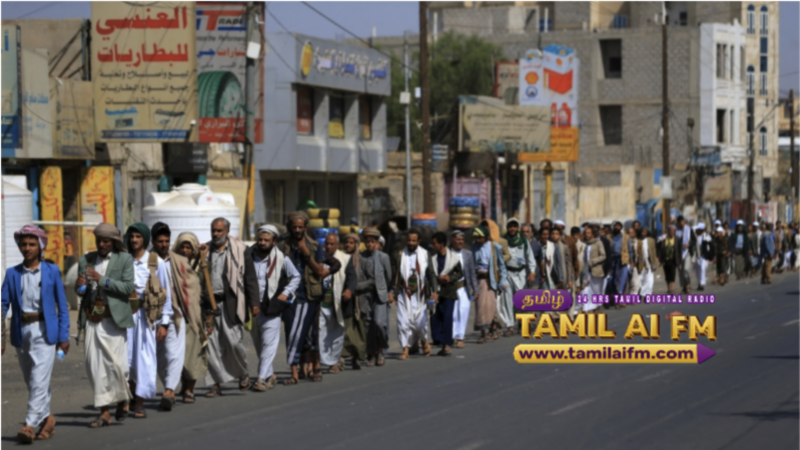
DUBAI — Within a matter of days, Yemen’s Houthis have swept south and seized the strategic Bab al-Mandab Strait, cementing their rise as a force to be reckoned with in the constellation of Iran-backed armed groups across the Middle East.
Once considered a relatively isolated religious and military movement, the Houthis now hold all of Yemen’s Red Sea coast, as well as significant territory in the country’s north, including the capital Sanaa.
Minority community
The Houthis belong to the Zaidi community, an offshoot of Shia Islam, which is a minority in Yemen’s mostly Sunni population.
They rose up in the 1990s in response to alleged sectarian discrimination against the Zaidis, who are mostly present in the country’s impoverished north.
The Houthi movement, also known as Ansar Allah (Supporters of God), is named after its late spiritual leader Badreddin al-Houthi and his son Hussein, who was killed by Yemeni government forces in 2004.
Houthi’s other son, Abdulmalik, assumed the reins of power, delivering fiery speeches and transforming his group from an isolated faction in the northwest into the ruling power in the capital and a regional player.
He now has tens of thousands of fighters, that are well-trained, tenacious and battle-hardened in Yemen’s harsh, mountainous terrain.