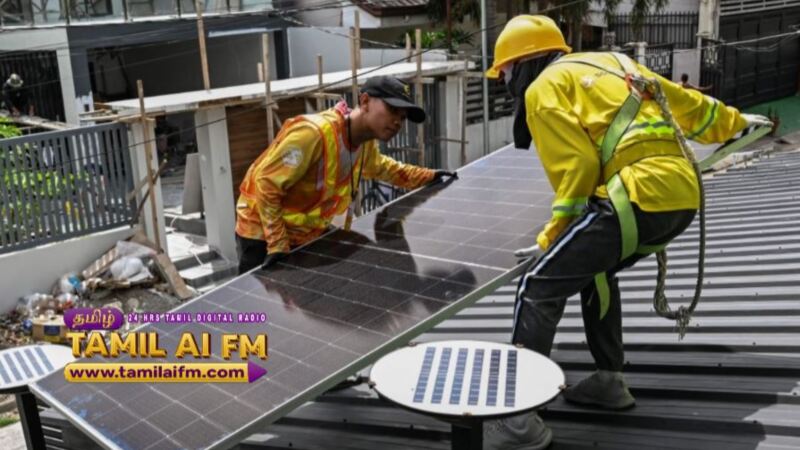
MANILA — Edwin Salas watched as the first of 20 solar panels was installed on the roof of his home, joining a Philippine solar energy boom sent into overdrive by the Middle East war.
The country’s eye-watering electric bills – the highest in the region – were the primary driver of his decision, he said. Regular brownouts were a factor, too.
“Even if we don’t achieve a zero bill, we’ll be able to save a lot and have power even during outages,” the 46-year-old shuttle bus driver told AFP at his house two hours south of Manila.
While the Philippine government has targeted a mix of 35 per cent renewable energy by 2030, industry experts say the solar surge is a bottom-up phenomenon driven by businesses and individual consumers.
“For years, rooftop solar was often framed as an environmental choice... today, it’s a practical response to financial pressure,” Brenda Valerio, country director for non-profit New Energy Nexus, told AFP.
The Philippines this year became China’s number two buyer of solar panels, according to a report from global energy think tank Ember.
The report estimated that rooftop installations had nearly doubled in the archipelago nation of 116 million since early 2025.
Mike de Guzman, CEO of Manila-based Solaric, told AFP the Middle East conflict had made the decision to switch an urgent one for many.
“It’s like a war happened and we were a bullet factory,” the 49-year-old said, adding that five months of inventory had been “wiped out” within weeks of the conflict’s outbreak in late February.
Months later, the firm was still getting 60 calls a day.